


 By Previnex®
GLP-1 medications work by slowing digestion and reducing appetite, which means they can meaningfully change how much and how often you eat.
For many people, that shift creates nutrition gaps that are easy to miss until they start affecting energy, muscle, and how you feel throughout the day. Staying consistent with protein, digestive support, and essential nutrients helps close the gaps that smaller meals can create.
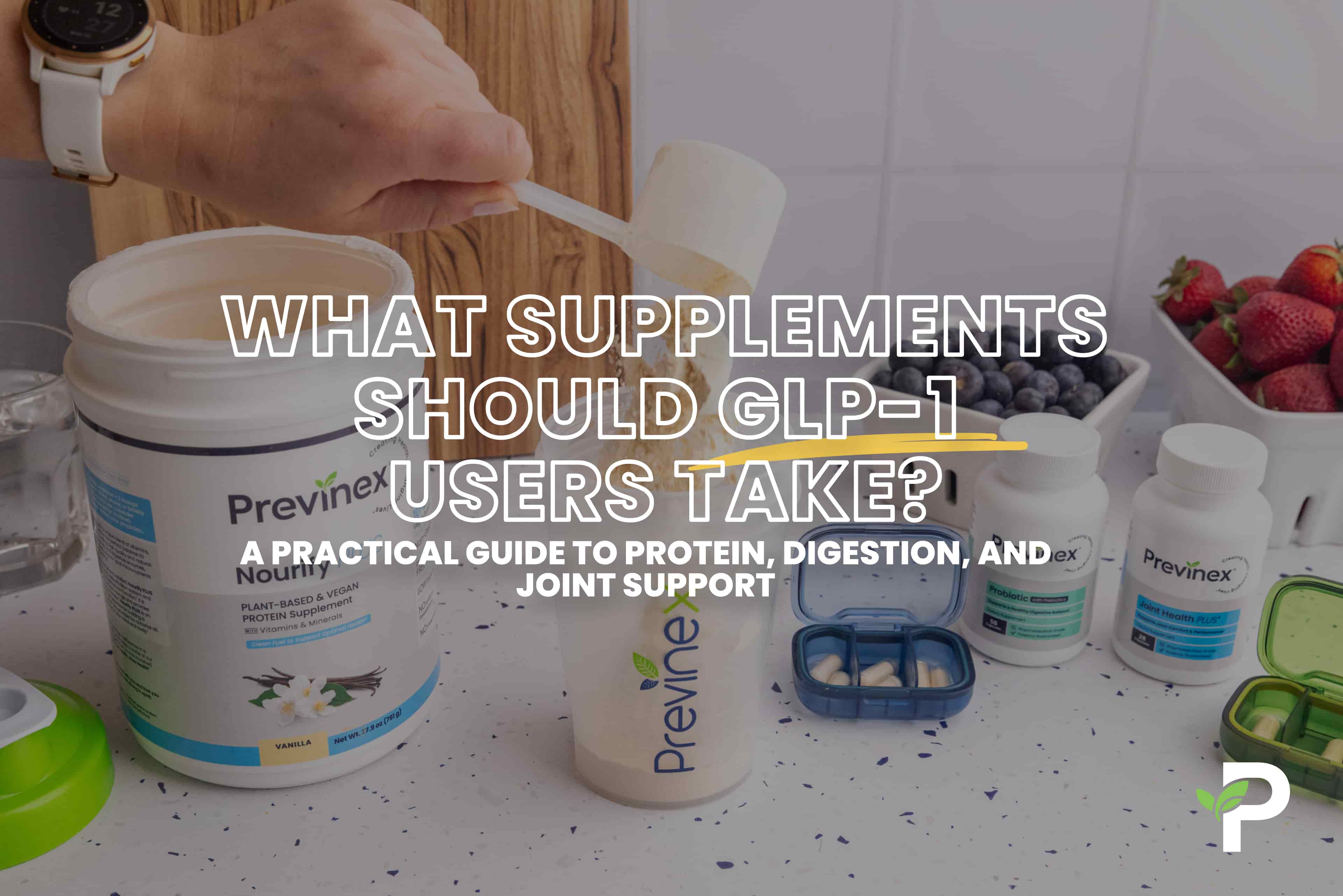
This guide walks through a simple, repeatable supplement routine for GLP-1 users who want to stay consistent. Every product in this stack is pharmaceutical-grade, third-party tested for purity and potency, and formulated based on published research.
Quick Answer
GLP-1 users most commonly benefit from a high-quality protein supplement, a probiotic, and joint support. This GLP-1 nutrition support stack helps maintain sufficient protein intake, provides digestive support, and covers daily micronutrient needs when appetite is lower.
How GLP-1 Medications Change Your Nutrition Needs
When meals get smaller, nutrition gaps can get bigger. Many GLP-1 users notice:
- It’s harder to get enough protein from meals alone
- Digestion changes and regularity needs more attention
- Energy can dip when you’re not eating enough throughout the day
A simple supplement routine can make nutrition support automatic.
What Supplements Should GLP-1 Users Take?
This stack is designed around three priorities: protein consistency, digestive support, and daily comfort for staying active.
1) Protein support: Nourify® PLUS
Protein is often the hardest box to check when appetite is reduced. A daily protein routine can help support muscle maintenance and recovery, especially for active adults.
Nourify® PLUS combines pea and rice protein to deliver a complete plant-based amino acid profile. It’s pharmaceutical-grade protein that’s third-party tested for purity and potency, and formulated to support muscle maintenance in a single daily serving.
Best for: GLP-1 users who want an easy daily routine, people strength training, anyone who struggles to hit protein consistently.
2) Digestive support: Previnex Probiotic
Meal timing and food volume changes can make digestive comfort and elimination feel less predictable. A daily probiotic is a straightforward way to support the gut microbiome as routines shift.
Previnex Probiotic delivers 30 billion healthy bacteria with a clinically proven prebiotic that helps with the growth and colonization of good bacteria in the gut. It supports gut microbiome balance, which can be disrupted when meal timing and food volume shift significantly.
Best for: GLP-1 users prioritizing digestion support and routine consistency.
3) Joint and mobility support: Joint Health PLUS®
Increased activity is one of the most common lifestyle shifts for GLP-1 users. Joint support can help you stay consistent with activity and daily comfort.
Joint Health PLUS® supports cartilage resilience and helps reduce the inflammation that can interfere with consistent movement.
Best for: Active adults, strength trainers, walkers, anyone prioritizing mobility support.
If you're working with a doctor or dietitian on your GLP-1 protocol, it's worth reviewing your supplement routine with them, especially around protein targets and any medications that affect nutrient absorption.
How To Take The Stack (Example Routine)
If appetite is lowest later in the day, prioritize protein earlier. Taking your protein within 30 minutes of your first meal makes it easier to build the habit before hunger becomes less predictable.
Keep it simple and repeatable:
-
Morning: Nourify® PLUS (protein anchor)
-
With first meal: Probiotic
- With dinner: Joint support
What To Look For In Supplements For Glp-1 Users
If you’re building a GLP-1-friendly routine, you can set yourself up for success if you look for the following:
-
Repeatable: Easy to take daily
-
Nutrition-first: Quality protein, digestion, and foundational micronutrients in sufficient dosages
- Honest claims: No quick-fix promises or weight-loss claims
Frequently Asked Questions
Can I take supplements while on GLP-1 medications?
For most people, yes. Common supplements like protein, probiotics, and a multivitamin are generally compatible with GLP-1 medications. That said, if you take medications that affect nutrient absorption, or if your doctor has given you specific guidance around your protocol, talk with them before adding anything new.
What do GLP-1 medications do to your nutrition needs?
GLP-1 medications slow digestion and gastric emptying and reduce appetite signals, which means most people eat less frequently and in smaller amounts. For many users, that makes it harder to consistently hit protein targets, which most active adults need in the range of 0.7 to 1 gram per pound of body weight daily. Digestive rhythm can also shift as the gut adjusts to slower motility, which is why micronutrient coverage and gut support become more important, even as overall food volume drops.
What supplements should I take on GLP-1?
Many GLP-1 users prioritize supplements that support protein intake, digestion, and micronutrient coverage. A practical starting point is a daily protein routine plus a probiotic, then add targeted support (like joint support) based on lifestyle.
Should I take protein supplements on GLP-1?
Needs vary, but many people find it harder to hit protein targets when appetite is reduced. A daily protein routine can help support muscle maintenance and recovery, especially for active adults.
Should I take a probiotic on GLP-1?
GLP-1 medications slow the movement of food through the digestive tract, which can affect the balance of bacteria in the gut microbiome over time. A daily probiotic with clinically studied strains can help support that balance and maintain digestive comfort as your eating patterns shift. It's a low-effort, consistent addition to a routine that can make a noticeable difference.
What should GLP-1 users focus on besides calories?
Protein is the top priority. When meals get smaller, muscle tissue becomes more vulnerable to breakdown, so hitting a daily protein target matters more. Hydration is also important, since appetite suppression can reduce the incidental hydration that comes from eating water-rich foods. Fiber supports digestive regularity, which can become less consistent on GLP-1 medications. And a daily multivitamin helps cover micronutrient gaps that are harder to fill when overall food intake drops.
Go deeper: Why do protein and digestive support matter on GLP-1s?
Try the GLP-1 Nutrition Support Stack
If you want an easy, repeatable routine that covers protein, digestion, and joint support while you're on a GLP-1 medication, try our GLP-1 Nutrition Support Stack.


